
EcoFlow
Lowest price
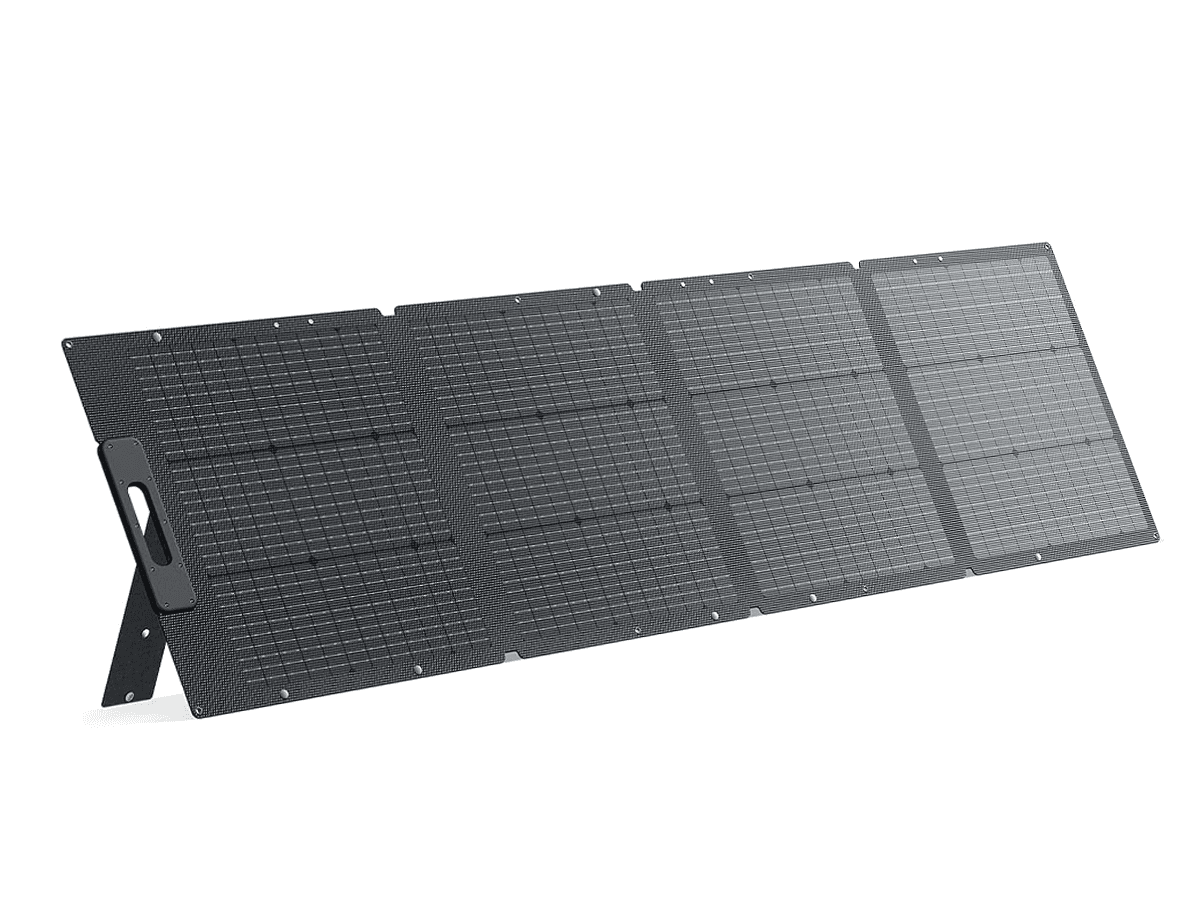
100W Flexible solar panel
- Output
- 100 W
- Weight
- About 2.3 kg
- Waterproofing
- IP68
- Cable
- Sold separately (£25)
Best verified UK price£109EcoFlow UK · checked 13 Nov 2026. Inc. VAT.

Evidence-led
Figures from the Energy Saving Trust, Ofgem, HMRC and the electricity network operators.
Practical
Costs, savings and the power-cut question answered, plus portable panels compared.
Independent
We show where sources disagree. Buying through our links costs you nothing extra.
A standard grid-connected solar system shuts down automatically when the power goes off. This stops electricity flowing back into the network while engineers may be working on it. It restarts by itself when the power comes back.
Home batteries usually shut down too. Only a battery designed and installed for backup (also called “island mode”) keeps going, and then only for selected circuits. Not every battery can do this, so ask your installer before you buy. Plug-in solar panels also switch off in a power cut.
Sources: UK Power Networks, Electricity North West, Energy Saving Trust
Typical figures from the Energy Saving Trust and HMRC. Your own costs depend on your home, roof and energy use.
About £7,600
For a typical 4.5 kWp home solar system, installed. Panels should last 25 years or more.
Source: Energy Saving Trust
About £4,600
For a 5 kWh home battery. Batteries range from £1,500 to £10,000 and last about 10 to 12 years.
Source: Energy Saving Trust
9 to 12 years
Typical solar payback with export payments: about 9 years in London, 10 to 11 in Manchester, 11 to 12 in Stirling.
Source: Energy Saving Trust
0% VAT
On installed solar panels and batteries until 31 March 2027. It goes back to 5% from 1 April 2027.
Source: HMRC
A portable panel can recharge a power station during a long power cut, with no installer needed. Output is measured under test conditions, so real output depends on the weather and the angle of the panel. Check your power station’s solar input limits before you buy.


Six things to check before you get quotes.
Getting paid for spare power
Under the Smart Export Guarantee, larger electricity suppliers must pay you for solar power you send to the grid. Rates vary but must be above zero. You’ll need an MCS-certified installation (or equivalent) and an export meter.
Sources: Ofgem, MCS
Planning permission
In England most roof panels are “permitted development”, so you don’t need to apply, within limits: no higher than the roof ridge and no more than 200 mm from the slope. Listed buildings, conservation areas and flats have extra rules. Scotland has its own rules.
Sources: Planning Portal, Scottish Government
Telling the network operator
Your local network operator must be told about your system. Small systems are notified after installation; bigger ones, often including batteries, need to apply first. Making sure it’s done is the owner’s responsibility.
Source: Energy Networks Association
Choosing an installer
Get three quotes from MCS-certified installers. A battery can go in a garage, on an outside wall or in a utility room, depending on the model.
Source: Energy Saving Trust
Help with the cost
The Warm Homes Loan Scheme offers homeowners government-backed, low- or no-interest loans of up to £15,000 each for solar panels and batteries. In England, the Warm Homes: Local Grant may fund solar for some low-income households.
Source: GOV.UK
Plug-in solar
Since 27 August 2026 you can buy and use a plug-in solar kit of up to 800 W in Great Britain, one per home, if it meets the government’s specification. You must register it. It isn’t yet legal in Northern Ireland.
Sources: GOV.UK, Energy Saving Trust
Questions to ask, from the official guidance.
Ask your installer whether the battery can run in backup (“island”) mode, and which circuits it will keep powered.
Get three quotes from MCS-certified installers before you commit.
Check your network operator will be told about the system. It’s the owner’s responsibility to make sure it’s done.
To earn export payments, you’ll need an export meter and an MCS-certified installation.
Installations finished by 31 March 2027 get 0% VAT. After that it rises to 5%.
If you live in a listed building, a conservation area or a flat, check the planning rules and get any permission you need first.
With a portable panel, check your power station’s maximum solar input voltage and current before you buy.
Report a power cut by calling 105 (03457 643643 in Northern Ireland).
Advice checked 13 November 2026. This page is general guidance, not financial or installation advice. Costs and savings are typical figures; get quotes for your own home.